
Packing for a holiday should be exciting. Yet for many travellers, it quickly becomes a battle between what they need and everything they might possibly need “just in case”. Why do we pack five extra outfits for a three-day trip? Why do we bring items we rarely use? And why does deciding what to leave behind feel so difficult?
The answer is a combination of psychology, emotions, and the way our brains prepare for uncertainty.
Why Do We Always Overpack?
Overpacking is rarely about the suitcase itself. It is usually about trying to feel prepared. When we travel, we leave behind our usual routines and surroundings. Our brains naturally look for ways to reduce uncertainty, and packing extra items can feel like a safety net.
Are you an overpacker?
| Do you? | Yes ✓ |
|---|---|
| Pack extra clothes because you might need them? | ✓ |
| Bring items you have not used on previous holidays? | ✓ |
| Pack multiple outfits “just in case” plans change? | ✓ |
| Take toiletries you could easily buy at your destination? | ✓ |
| Choose a bigger suitcase because you have more space available? | ✓ |
| Take toiletries you could easily buy at your destination? | ✓ |
| Choose a bigger suitcase because you have more space available? | ✓ |
| Feel stressed deciding what to leave behind? | ✓ |
| Pack items based on possible problems rather than your actual plans? | ✓ |
If you ticked several of these, you may not have a packing problem, you may simply be trying to prepare for too much uncertainty. The key is learning to separate what is essential from what is only a possibility.
Common reasons people overpack include:
- “Just in case” thinking - worrying about situations that may never happen
- Fear of being unprepared - wanting a solution for every possible scenario
- Emotional attachment to possessions - feeling uncomfortable leaving familiar items behind
- Too many choices - struggling to decide what is genuinely necessary
A suitcase becomes more than just storage, it becomes a way of managing travel anxiety.
The “Just in Case” Packing Trap
One of the biggest causes of overpacking is the phrase:
“I might need it.”
It is easy to imagine every possible situation:
- What if the weather changes?
- What if I need a smarter outfit?
- What if my shoes become uncomfortable?
- What if I spill something?
- The classic - I might pee myself four times
The problem is that packing for every possibility quickly creates an unrealistic list of items. A useful question to ask is:
“If I don’t pack this, can I realistically solve the problem another way?”
For many items, the answer is yes.
A lightweight jacket can often replace multiple “just in case” layers. A versatile pair of shoes can often replace several options. Planning outfits before packing can prevent unnecessary extras.
Holiday Anxiety and the Need to Feel Prepared
Travel involves many unknowns, from changing weather and unfamiliar environments to different routines and unexpected changes of plan. Packing gives us a sense of control in an otherwise unpredictable situation. By preparing for every possible scenario, we create a feeling of confidence before we leave, but this can often result in bringing far more than we actually need. Psychologists describe this as an attempt to reduce uncertainty. The more unpredictable a situation feels, the more likely we are to overprepare.
Decision Fatigue: Why Packing Feels So Difficult
Another reason people overpack is decision fatigue. Before a holiday, we make hundreds of decisions:
- Where to go
- What to book
- What documents to bring
- What clothes to wear
- What electronics to pack
Eventually, making more choices becomes harder. When faced with a suitcase full of options, many people choose the easiest solution:
Pack everything.
Reducing the number of decisions can make packing much easier. Creating a repeatable packing system means you spend less time debating every item.
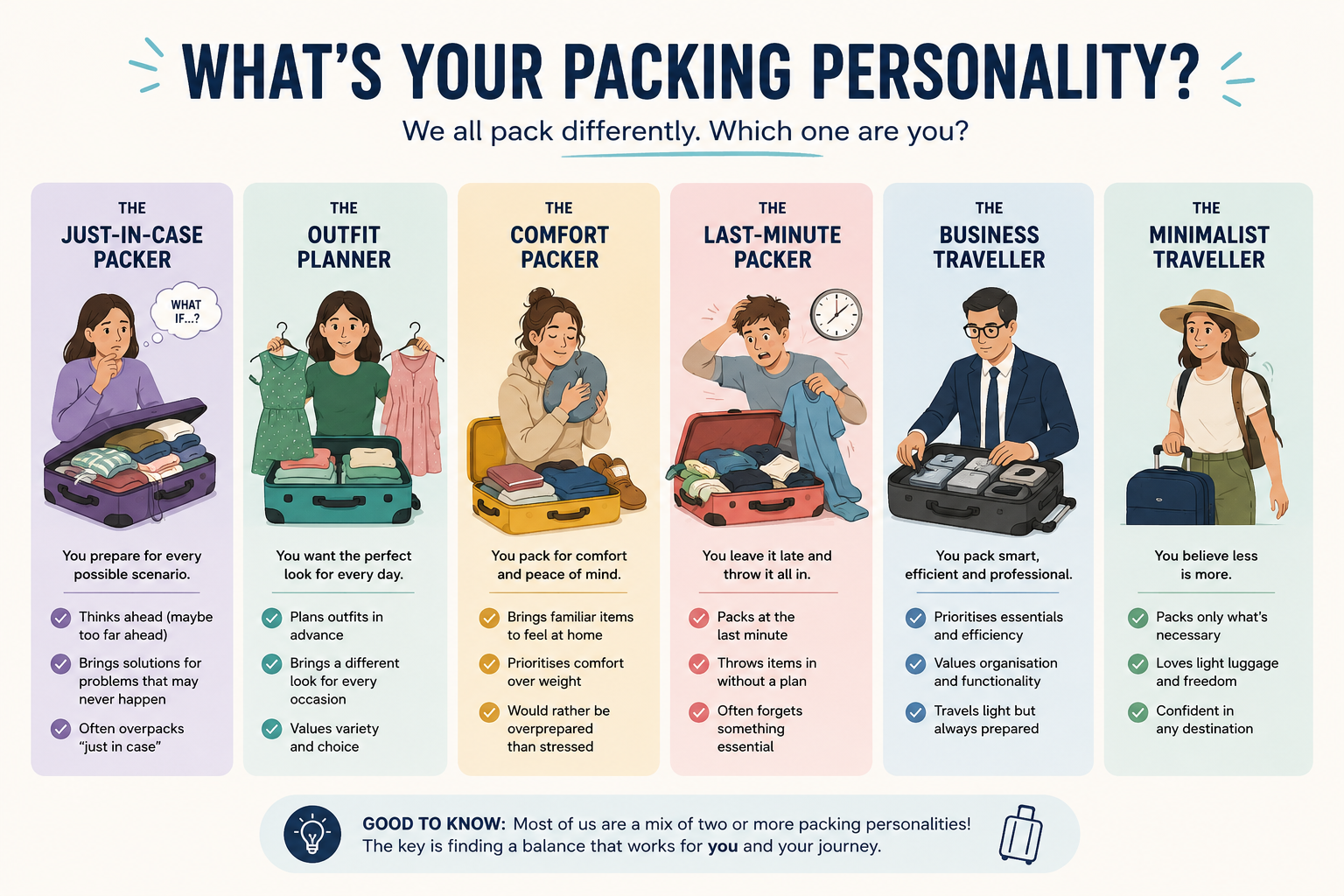
Your packing personality
Have you ever wondered why some people can pack for a week in a cabin bag, while others struggle to zip up a large suitcase for a weekend away? The answer often comes down to your packing personality. Our habits, thought processes and travel experiences all influence how we pack. Which of these packing personalities sounds most like you?
How to Pack Smarter Without Taking Too Much
Packing less does not mean being unprepared. It means being more intentional. One of the easiest ways to avoid overpacking is to ask yourself whether an item is something you'll genuinely use or simply something you're packing "just in case". While every trip is different, separating essentials from non-essentials can help you pack more efficiently and avoid filling your suitcase with items that never leave the bag. The table below highlights some common examples.
| Item | Need to pack ✓ | Consider leaving behind ✗ |
|---|---|---|
| Comfortable walking shoes | ✓ | |
| Three pairs of “backup” shoes | ✗ | |
| Weather-appropriate jacket | ✓ | |
| Multiple coats for possible weather changes | ✗ | |
| Everyday toiletries | ✓ | |
| Versatile outfits | ✓ | |
| Clothes for every possible occasion | ✗ | |
| Fourteen extra pairs of pants | ✗ | |
| A wooly hat and scarf when travelling to Greece | ✗ |
Try these simple strategies:
1. Plan outfits, not individual items
Instead of packing random clothing pieces, decide what you will actually wear each day. This prevents taking items that do not work together.
2. Choose versatile clothing
Items that can be worn in multiple ways help reduce the amount you need to bring.
Think:
- Neutral colours
- Layering options
- Comfortable footwear
- Clothing suitable for multiple occasions
3. Use the 80% rule
Your suitcase does not need to be completely full. Leaving some spare room allows flexibility for:
- Souvenirs
- Purchases
- Unexpected items
4. Consider the size of your luggage
A larger suitcase often encourages people to pack more. Choosing luggage that matches your trip can naturally limit unnecessary packing. A weekend break usually requires a different approach to a two-week holiday.
5. Make a packing list - then edit it
A list helps prevent forgetting essentials, but the editing stage is just as important. After writing your list, ask:
- Have I used this on previous trips?
- Am I bringing this because I need it or because I am worried?
- Could one item replace several others?
What Do Experienced Travellers Pack Differently?
Frequent travellers often pack differently because they understand that most problems can be solved. They tend to prioritise:
- Lightweight luggage
- Multi-purpose clothing
- Essential toiletries
- Comfortable shoes
- Important documents
- Items that improve convenience
The goal is not to have everything with you - it is to have everything you actually need.
Frequently Asked Questions About Overpacking
People often overpack because they want to feel prepared for unexpected situations. “Just in case” thinking, anxiety about travel, and difficulty making decisions can all contribute to bringing unnecessary items.
How can I stop overpacking?
Create a packing list, plan outfits in advance, choose versatile items, and remove anything you are only bringing because you might need it.
Is a bigger suitcase better for holidays?
Not always. A larger suitcase provides more space but can encourage overpacking and may lead to heavier luggage. Choosing luggage based on the length and type of trip is usually more practical.
How much clothing should I pack for a holiday?
A good approach is to pack enough for your planned activities while choosing items that can be mixed and matched. Many travellers find that fewer, more versatile pieces are easier to manage.
Pack for the Holiday You’re Taking, Not Every Holiday You Imagine
Overpacking is often less about luggage and more about our desire to feel prepared. The next time you pack, remember: you do not need to prepare for every possible situation. You only need to prepare for the trip you are actually taking.
A lighter suitcase can mean easier journeys, less stress, and more freedom to enjoy the experience.